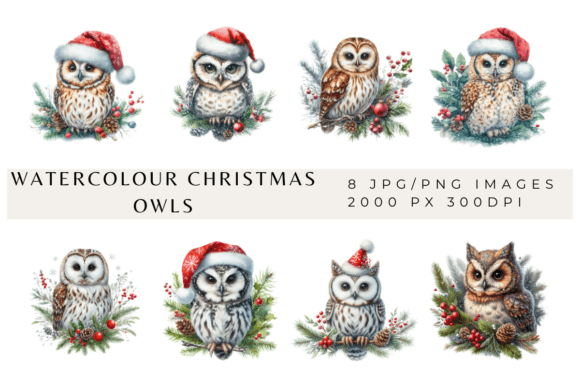
Reviewing Watercolour Christmas Owls for Stitchers
As a designer who spends more time staring at stitch maps than actual fabric, I have learned that not every pretty picture translates into a successful machine embroidery design. Some look fantastic on screen but turn into a tangled mess of thread breaks and puckering once the needle hits the hoop. When I first pulled up the Watercolour Christmas Owls file, my initial reaction was cautious optimism. The aesthetic is undeniably charming, tapping into that soft, whimsical holiday vibe that sells well in boutique settings. But charm alone does not make a viable product. I needed to know if this Illustrations-style asset could withstand the mechanical realities of embroidery.
The First Impression: Mood and Visual Personality
The immediate appeal of Watercolour Christmas Owls lies in its gentle, artistic approach. Unlike traditional, rigid holiday motifs that rely on sharp geometric lines and heavy saturation, this design mimics the fluid, bleeding edges of watercolor paint. For an embroidery project, this presents both an opportunity and a challenge. The mood is cozy, nostalgic, and slightly rustic. It feels less like a corporate holiday card and more like a handmade gift from a neighbor. This visual personality makes it a strong candidate for markets that value authenticity over perfection. If you are an Etsy seller or a small shop owner targeting customers who appreciate artisanal quality, this design fits the bill perfectly. It suggests warmth and care, which are crucial emotional triggers for holiday purchases.
Real-World Application: From Screen to Sweatshirt
To truly evaluate this design, I imagined a specific real-life scenario: creating a limited run of custom holiday sweatshirts for a local boutique. The client wanted something festive but not cheesy, suitable for adults who might wear it to a casual office party or a family gathering. I placed the Watercolour Christmas Owls on the left chest area of a heather grey fleece hoodie. This is where the rubber meets the road.
In this context, the design performs surprisingly well. The organic shapes of the owls blend nicely with the textured surface of the fleece. Because watercolor styles often rely on subtle gradients rather than hard outlines, the design avoids looking too "stiff" on soft apparel. However, I had to be mindful of the thread colors. A direct translation of digital watercolor requires careful selection of embroidery threads to mimic those soft transitions. I found that using variegated threads or closely matched shades of cream, soft brown, and muted green helped achieve that painted look without relying on overly dense fill stitch patterns that could weigh down the fabric.
Beyond apparel, I considered this design for a tote bag design. Canvas is a forgiving medium for heavier stitches, allowing the details of the owl’s feathers and the surrounding holiday elements to pop. Here, the design acts as a central focal point. It transforms a plain utility item into a personalized gift or a standout small shop product. The versatility extends to home decor as well; imagine this stitched onto a linen pillow cover or a kitchen towel. In these applications, the Watercolour Christmas Owls adds a touch of elegance that mass-produced prints often lack.
Navigating Technical Challenges and Fabric Choices
While the design is visually appealing, it is not without its technical pitfalls. The watercolor effect implies a certain level of detail and shading that can be tricky to reproduce with thread. If you are working with a stretchy fabric like a thin t-shirt jersey, you must proceed with caution. The stitch density needs to be balanced carefully. Too dense, and the fabric will pucker around the owl’s body; too sparse, and the underlying fabric will show through, ruining the illusion of a painted image. I strongly recommend using a cut-away stabilizer for any knit fabrics to provide long-term support.
Another critical consideration is the hoop size. If you are attempting to shrink this design to fit a small pocket or a baby’s onesie, you risk losing the intricate details that define the watercolor style. Tiny running stitch accents might become indistinguishable blobs. For baby embroidery, I would suggest simplifying the color palette and ensuring the smallest elements are large enough to stitch cleanly. Conversely, on dark fabrics, the lighter tones of the watercolor owls need high-contrast underlay stitching to ensure they don’t get lost in the background. Always test your embroidery file on a scrap piece of your actual production fabric before committing to the final finished product.
Commercial Viability and Brand Consistency
For commercial embroidery professionals and craft business owners, the value of Watercolour Christmas Owls extends beyond aesthetics. It offers a way to differentiate your offerings. In a market saturated with standard red-and-green Santa Claus motifs, this design stands out as sophisticated and modern. It enhances brand consistency for shops that focus on natural, organic, or handcrafted vibes. When customers see this level of thoughtful design execution, it builds trust. They perceive the item as higher value, justifying a higher price point.
However, professionalism is key. A sloppy stitch-out can ruin the delicate illusion. Ensure your machine is well-maintained, your needles are fresh, and your tension is calibrated. Using high-quality rayon or polyester threads can also enhance the sheen, adding to the visual appeal. For those creating printable mockup assets or digital previews for online listings, this design photographs beautifully. The soft edges and natural colors tend to look great in lifestyle shots, helping to drive buyer engagement on platforms like Etsy or Instagram.
Practical Designer Notes for Success
- Test on Scrap Fabric: Never skip this step. Check how the fabric texture interacts with the stitch types.
- Check Thread Contrast: Ensure your thread colors have enough distinction to create the watercolor effect without blending into mud.
- Review Stitch Density: Adjust density if stitching on lightweight or stretchy materials to prevent puckering.
- Confirm Hoop Size: Make sure the design fits your intended placement without needing excessive resizing that compromises detail.
- Inspect Small Details: Zoom in on the digitizing. Look for potential jump stitches or trims that might need manual cleanup.
- Use Proper Stabilizer: Match the stabilizer to the fabric weight. Cut-away for knits, tear-away for stable wovens.
- Verify Licensing: Before selling items made with this digital embroidery file, confirm the license terms allow for commercial use of finished goods.
In conclusion, Watercolour Christmas Owls is a strong contender for holiday collections, provided you respect its technical requirements. It is not a plug-and-play solution for every fabric type, but with careful planning and quality execution, it can elevate your custom apparel, embroidered patch projects, and home decor items. It bridges the gap between digital art and tactile craft, offering a unique value proposition for makers who want to stand out. Treat it with the attention it deserves, and it will reward you with a beautiful, sellable embroidery project that customers will love.